


On October 31st we commemorate Reformation Day. On that date in 1517, Martin Luther nailed his Ninety-Five Theses to the doors of the Wittenberg Castle Church, thus beginning what we now call the Protestant Reformation.
It is often said that Luther was angered by the deformation of the Church. Even Roman Catholic theologians and historians acknowledge that the sixteenth century culminated in many deformations within the Church. The Church was crying out for reform and renewal. That was precisely what Luther desired—to inspire reform within the Western Church. Unfortunately, he did not succeed. A schism occurred. Under Luther’s leadership, the Evangelical Church was born; later, under John Calvin’s leadership in Geneva, the Reformed Church emerged; and under the leadership of Archbishop Thomas Cranmer, the Church of England was reformed, having separated from Rome somewhat earlier.
In addition to these three traditional Reformation movements, Anabaptism arose as the so-called radical wing of the Reformation. Later, especially in the nineteenth and twentieth centuries, new communities appeared, which then further divided into numerous other groups—a process that continues into the twenty-first century.
Thus we arrive at today’s image of Protestantism, which is, in fact, a confusing one. When people ask what Protestants believe, what their liturgical practice is, how they view the sacraments, and so forth—considering the current diversity of what is called Protestantism—the answer cannot be unambiguous.
Has Protestantism, as we have it today, succeeded in reformation, or has deformation occurred within it instead of reformation?
The Church in Reformation Thought and Practice Today
Let us begin with the Church. For the Reformers, there was no doubt: they loved the Church, desired its renewal, and because of that love were willing to give even their lives.
Although an unintended schism occurred, they did not view their churches—whether Evangelical, Reformed, or Anglican—as the only valid Church, but as part of the one, holy, catholic (that is, universal), and apostolic Church. They regarded the division as an unfortunate and temporary state until the entire Church could be reformed.
They taught about the “Visible” and “Invisible” Church. The Invisible Church consists of believers who truly belong to Christ—His body—while the Visible Church is the organized community manifest through particular churches, or what we today call denominations. Yet for them there was no doubt: one cannot belong to Christ, to the Invisible Church, without belonging to a concrete, visible church in a specific place and time.
Today, however, more and more voices claim that adherence to a visible Church is unnecessary, even sinful. When such individuals are asked, “Which church do you belong to?”, they reply, “To Christ’s,” meaning, of course, the Invisible Church. Their slogan is: “Christ yes, Church no.” They say, “Church is religion, and Christianity is not a religion.”
But one cannot belong to Christ without belonging to His Church. The Church is His Body! One cannot belong to the “universal” or invisible Church without belonging to a concrete Christian fellowship in which the Church becomes manifest.
This is not the teaching of the Reformation. It is a deformation—one for which that part of Protestantism which no longer teaches sound doctrine about the Church is to blame.
A Christian loves the Church and cares for every part of it, across all denominations of Christ’s one universal Church.
The Sacraments in Reformation Thought and Practice Today
The Reformers, although they reduced the number of sacraments to two (without entirely rejecting the others, but redefining or renaming them), reformed rather than deformed the teaching on the sacraments.
For the Reformers, “the Church is where the Word of God is preached and the sacraments are duly administered.” Baptism and the Eucharist thus hold an important place in early Protestant theology. The sacraments are God’s action, not ours. They are “visible signs of invisible spiritual grace.”
That is why baptism is an unrepeatable sacrament. Where God acts, we cannot question the validity of the holy sign (the holy mystery). Denying the validity of baptisms performed in another Christian denomination, done with right intention and in the name of the Father, the Son, and the Holy Spirit, is not reformation—it is deformation.
For the Reformers, the Eucharist signified the real presence of Christ. True, they rejected a material transformation, but in a spiritual—or better, sacramental—sense, Christ was truly present in the Eucharist. Mere remembrance or commemoration, as some so-called “churches of the Reformation” interpret the Lord’s Supper today, was condemned by the Reformers as heresy. That is not Reformation teaching—it is a deformation of the ancient faith regarding the Eucharist and of Reformation teaching concerning this essential Christian sacrament.
Private Interpretation of the Bible Outside the Context of the Church
The Reformers placed the Bible into the hands of the people. They translated it into the vernacular so that everyone could know the message of God’s Word. Yet the Reformers did not believe that everyone was capable of interpreting the Bible.
Many have misunderstood the Reformation teaching on the “priesthood of all believers.” This does not mean that the Reformers abolished church offices or the Church’s teaching authority, nor that they thought everyone could interpret and preach Scripture. No—the “priesthood of all believers” means that all believers have direct access to God in prayer, confession, and so forth, and that priestly mediation, as understood in the pre-Reformation Church, is not necessary. We all have access to God. Yet the ministries within the Church remain: only those called to ministry and prepared for it—academically and spiritually—may interpret God’s Word.
The consequences of believing that everyone may interpret Scripture as they please are evident today. Hundreds and thousands of Christian sects have arisen as a result of this distorted understanding of the Reformation. In truth, it represents a grievous and painful deformation of the Body of Christ.
Liberal Theology – The “Child” of Protestantism
Certain traditional Protestant denominations have become the leaders of what is called liberal theology. Such theology has primarily emerged from Protestant theological faculties that, instead of training ministers for Church service, have become essentially secular institutions with a theological label. Their students may graduate as theologians, but they do not become theologians in the true sense. Some openly declare themselves atheists, others agnostics, and others liberal theologians (which is in fact merely a form of atheism).
Such “theologians” reject basic Christian doctrines that are firmly rooted in Scripture—such as the virgin birth, the resurrection, the second coming of Christ, and eternal life.
While the Reformers fought for the purity of evangelical doctrine (hence the term Evangelicals), some contemporary Protestants lead the way in rejecting biblical truths as outdated, calling themselves progressive.
That is not reformation—it is a grave sin against the fundamental Reformation teaching concerning the Word of God. It is a serious deformation.
Some liberal theologians, though deans or professors at theological schools, actually have no need for the Church. They do not attend Sunday worship, they seldom (if ever) receive the Eucharist, yet they instruct future ministers of the Church. What an absurdity, what a deformation!
How many public figures today promote liberal ideas while presenting themselves as theologians! Most of them are “theologians” with degrees from Protestant or evangelical institutions.
Christian Morality and Ethics
Many values in the secular society of the twentieth and twenty-first centuries have been redefined. Society increasingly advocates for the rights of LGBT persons—their right to marriage, to adopt children, and so forth.
Of course, secular society has the right to do so, and everyone has the right to live as they choose. We may agree or disagree, but we may not deny anyone their civil rights. The problem arises, however, when society seeks to change biblical and Christian teaching. Scripture is very clear regarding the shared life of two people within the context of marriage: it is exclusively the union of a man and a woman, and sexual relations, according to the Bible, are permitted only between one man and one woman living together in what we call marriage.
Yet many traditional Protestant churches today are among the most zealous advocates of same-sex marriage and even of ordaining LGBT persons to ministry. Moreover, many traditional Protestant churches support abortion rights and similar causes.
Such positions are not in the spirit of the Reformation. They are grave deformations of Christian and Reformation teaching on humanity, family, and life.
Regardless of societal change and the rights every individual has within that society, the Church must remain faithful to biblical teaching.
The Rejection of Gospel Preaching
This indeed sounds strange. Is it possible that this is happening among Protestants—those once ready to die for the Word of God? Sadly, yes. For where the doors are opened to liberal theology and practice, where church activity becomes activism rather than evangelism, there is no longer preaching of the Gospel.
Where the Gospel is no longer proclaimed, the doctrine of salvation becomes relativized. Christ is no longer preached as the only way to God. Yet one of the core principles of the Reformation was Solus Christus—Christ alone.
A severe deformation is spreading ever more deeply within Protestantism.
A Deformed Church Falls Apart
The Church of Christ has endured and will endure until His coming. But those parts of the Church that are deformed will disintegrate. This is more than evident in our time. The traditional Protestant churches of Europe that have embraced liberal theology and practice are losing members. Many parishes are disappearing. All of this is a dreadful consequence of deformation instead of reformation.
“Ad fontes” – Let Us Return to the Sources
The Reformers called out Ad fontes—“Let us return to the sources.” They did not completely reject previous faith and practice. Yet where the Church had become deformed, it needed reformation. This return “to the sources” meant a return to the Bible and the early Church—to early Christian teaching. Not to something new, but to something old and true.
Because of various present-day deformations, new movements and teachings arise, claiming to bring a “new reformation.” Yet instead of restoring the Church, they contribute to further deformation of Christ’s Body through more divisions and sectarianism. They introduce new teachings lacking any foundation in either Scripture or the early Church, thereby producing even more deformations.
One such movement is “The Last Reformation,” founded by a certain Torben Søndergaard from Denmark, whose teaching is increasingly spreading in our regions. Anyone who seriously studies his teaching will see that it is a serious distortion of the Gospel, a dangerous psychological manipulation—indeed, a grave deformation.
Reformation is not a call to a new teaching or a new morality. Let us return to the sources, to that beautiful “old faith,” as one spiritual song puts it. The manner of proclaiming the Gospel may and should be new, adapted to the age in which we live—but not the content of that proclamation. When we alter the content, we deform biblical and Christian teaching.
Conclusion
We could list many other deformations within Protestantism, but even these few examples are enough to make us reflect: where is Protestantism today? Protestantism is in a serious crisis and, to a large extent, in a serious state of deformation. It is time to return “to the sources,” to truly become the Church in which the Reformers believed. I fear that if the Reformers could see what has happened to the churches of the Reformation, they would be deeply disappointed.
May the remembrance of the Reformation inspire us to return to the “old faith,” the biblical faith, and to reject all the deformations that, sadly, characterize much of today’s Protestantism.

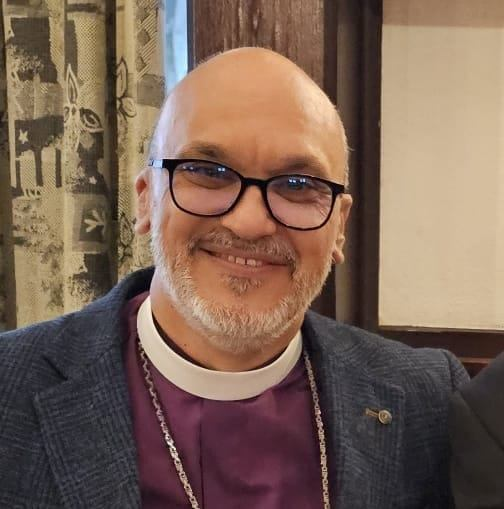
Rt.Rev. Jasmin Milić,Ph.D (Reformed Episcopal Church in Croatia and Serbia)
More about the Reformed Episcopal Church in Croatia and Serbia can be found here.