
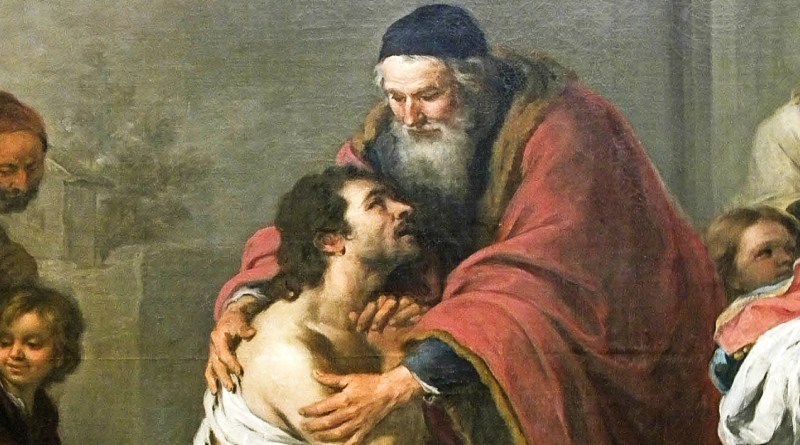
The Parable of the Prodigal Son – Lk 15:11-32 – The Ninth Sunday after Trinity
A reflection on the Parable of the Prodigal Son (Luke 15), exploring the themes of sin, repentance, divine mercy, and the boundless love of God the Father who welcomes His children back with open arms.
The Collect
GRANT to us, Lord, we beseech thee, the spirit to think and do always such things as are right; that we, who cannot do any thing that is good without thee, may by thee be enabled to live according to thy will; through Jesus Christ our Lord. Amen.
The Gospel:
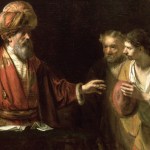
JESUS said, A certain man had two sons: and the younger of them said to his father, Father, give me the portion of goods that falleth to me. And he divided unto them his living. And not many days after the younger son gathered all together, and took his journey into a far country, and there wasted his substance with riotous living. And when he had spent all, there arose a mighty famine in that land; and he began to be in want. And he went and joined himself to a citizen of that country; and he sent him into his fields to feed swine. And he would fain have filled his belly with the husks that the swine did eat: and no man gave unto him. And when he came to himself, he said, How many hired servants of my father’s have bread enough and to spare, and I perish with hunger ! I will arise and go to my father, and will say unto him, Father, I have sinned against heaven, and before thee, and am no more worthy to be called thy son: make me as one of thy hired servants. And he arose, and came to his father. But when he was yet a great way off, his father saw him, and had compassion, and ran, and fell on his neck, and kissed him. And the son said unto him, Father, I have sinned against heaven, and in thy sight, and am no more worthy to be called thy son. But the father said to his servants, Bring forth the best robe, and put it on him; and put a ring on his hand, and shoes on his feet: and bring hither the fatted calf, and kill it; and let us eat, and be merry: for this my son was dead, and is alive again; he was lost, and is found. And they began to be merry. Now his elder son was in the field: and as he came and drew nigh to the house, he heard musick and dancing. And he called one of the servants, and asked what these things meant. And he said unto him, Thy brother is come; and thy father hath killed the fatted calf, because he hath received him safe and sound. And he was angry, and would not go in: therefore came his father out, and intreated him. And he answering said to his father, Lo, these many years do I serve thee, neither transgressed I at any time thy commandment: and yet thou never gavest me a kid, that I might make merry with my friends: but as soon as this thy son was come, which hath devoured thy living with harlots, thou hast killed for him the fatted calf. And he said unto him, Son, thou art ever with me, and all that I have is thine. It was meet that we should make merry, and be glad: for this thy brother was dead, and is alive again; and was lost, and is found. Luke 15:11-32
The Parable of the Prodigal Son – Sermon
In the Gospel according to Luke, chapter 15, we are told three parables whose central theme is “the lost”: the lost sheep, the lost coin, and the lost—or, rather, prodigal—son (Luke 15:1–32).
The background of these parables is the accusation brought against Christ that He associates with sinners. The Pharisees and the scribes complain that He does not condemn sinners but instead eats and drinks with them, thereby showing that He is close to them. For this reason, they accuse Him of being a sinner Himself.
These parables confirm Christ’s mission. Responding to the above accusations, Christ says: “They that are whole have no need of the physician, but they that are sick. I came not to call the righteous, but sinners to repentance” (Mark 2:17). He looks at sinners differently than the Pharisees and scribes. He is not exclusive toward them but approaches them as a shepherd seeking the lost sheep with selfless devotion.
The parable of the prodigal son is unusual. It tells us about a father and his two sons. The elder son is obedient to his father. He works diligently on his father’s estate, is responsible, and patiently waits for his inheritance, which by law can come to him only after his father’s death. Thus, he shows respect for his father, for tradition, for the law, and through all of this he honors the God of his fathers, who established these rules. From a human perspective, the elder son deserves our respect.
The younger son is disobedient; he cares nothing for norms, customs, or tradition, and ultimately he does not care for his own father. He perceives himself as a slave in his own family. He wants freedom; he wants “the portion of goods” which he has not earned but believes is his right. He wants to go his own way and live a life without his father. By demanding his inheritance, the younger son seeks to break off the common life with his father. The Greek word used here for “goods” is bios (life). In reality, the younger son wants “his own life.”
The younger son is the exact opposite of the elder. He has no respect for his father, tradition, law, or God. From a human point of view, he does not deserve our respect.
The younger son left with his father’s wealth. He had and he spent—spent recklessly. He behaved as a wastrel, living a life of immorality. While he had money, he also had friends—friends he simply bought. But after some time, the younger son began to reap what he had sown. He fell into hardship. His money ran out just as famine struck the land in which he was living.
In this difficult situation, the younger son had to find a way to survive. He found work as a swineherd—something deeply humiliating for Jews. A rabbinic saying goes: “Cursed is the man who breeds swine.” To make the humiliation worse, he was so hungry that he wanted to eat the pods given to the pigs, but he was not given even that. Therefore, after he “came to himself,” he decided to return to his father, for even his father’s hired servants lived better than he did now. He resolved to say to his father: “Father, I have sinned against heaven and before thee, and am no more worthy to be called thy son: make me as one of thy hired servants.”
He returned to his region, to his home. His father was waiting for him; seeing him from afar, he ran to meet him, embraced him, and kissed him. From a human point of view, we might say that the father did not act wisely. Does the younger son deserve understanding after all he had done? If the father received him back, does this prodigal son deserve to have all the dignity restored that he had before leaving and wasting the inheritance?
The father’s reaction surely moved the prodigal son, who spoke the words of repentance: “Father, I have sinned against heaven and before thee, and am no more worthy to be called thy son.” If his initial intent had been only to escape hardship, the meeting with his father certainly brought him to genuine repentance.
The elder son’s reaction is understandable. His brother, a libertine and a wastrel, has squandered his portion of the inheritance and will now live off what remains—which in truth is the elder and more obedient brother’s portion. This is not fair, and again, from a human standpoint, it is natural to side with the elder brother. What is happening to him is, in fact, unjust.
But this parable does not follow human logic—it follows divine logic. And all of us can find ourselves in it, whether in the role of the elder or the younger—the prodigal—son.
The father is the image of the heavenly Father. The two sons are images of believers. The elder son is the image of the good, obedient child of God whose obedience rests only on the observance of rules. The prodigal son is the image of the fallen child of God who believes he can live without God. And before we condemn the prodigal son, let us think how many times we, as believers, have wished to live “our own life” without God. Sometimes the Christian life may seem too demanding. We want freedom; we want to be our own masters. We want to be Christians, but we do not want God to interfere too much in our lives. At times we feel restricted, not free. The reason for such thinking is a misunderstanding of true freedom. What we think will make us happy and free without God actually leads us into slavery and humiliation—as we see in the parable of the prodigal son.
The prodigal—or lost—son did not understand that what he had was not earned by him but was his father’s. He sought “his own.” Sometimes we too think we deserve God’s blessings, that we have “earned” His favor. We forget the grace of God given to us out of His pure love for us. We do not deserve His favor. Yet in trouble we sometimes say: “God, what have I done to deserve this?”—thinking that our merits are good, not bad. The Psalmist says: “If thou, LORD, shouldest mark iniquities, O Lord, who shall stand? But there is forgiveness with thee, that thou mayest be feared” (Psalm 130:3–4).
Even believers sometimes behave like teenagers who want to live “their own life,” sometimes saying, “I’ve had enough—give me my freedom to go my own way.” They want to break the bond with God. This is exactly what happened to our first parents—they wanted life without God. We all know the consequences of that choice.
While we are in the Father’s house—in the Church—we can rely on the Father’s blessing. But when we leave the Father’s home, we deprive ourselves of the wonderful blessings God has for us. We will not lose our Father or our home if we return to God in repentance, as we see at the end of this parable, but we will lose many blessings we could have had if we had not left the Father’s house.
Life without the Father is futile, empty, without purpose, without a sure foundation. The younger son “wasted his substance with riotous living” (Luke 15:13). This is an image of all who squander the gift of life in vanities without God.
Finding himself in famine—due to a misfortune he could not control—the prodigal son found it even harder without his father’s blessing. Sadly, we cannot control every situation in which we find ourselves. War, natural disasters, and similar troubles affect everyone caught in them. Yet in a world of troubles, sufferings, and problems, the believer can endure only in fellowship with God.
A believer who thinks he can manage alone, without God, will often be humbled by God so that he realizes he is nothing without Him. Nothing outside of God can satisfy our spiritual hunger or emptiness. Blessed Augustine said: “Thou hast made us for thyself, O Lord, and our heart is restless until it rests in thee.”
The troubles we encounter when we go our own way, when we distance ourselves from God, are in fact meant for our good. In such a situation, the younger son “came to himself.” He realized that his desire for freedom had brought him to the pigsty. Yes, God wants us to “come to our senses.” The younger son realized that even his father’s servants were better off than he was. He had thought that life outside his father’s house would be much better, full of joys and pleasures—but he was terribly mistaken. He realized he had sinned against Heaven and against his father. He understood that his sin was a dishonor to God. In truth, every sin is above all a rebellion against God.
Sometimes God places us in certain situations so that we might recognize our sin, repent, and return to the Father’s embrace. The prodigal son, after he “came to himself,” understood what he had done and decided to return to his father’s house. The father was waiting for him, saw him from afar, and ran to meet him. The father did not rebuke the son but loved him and rejoiced at his return. The son had gone through many hardships, learned his lesson, and reaped what he had sown. Now he was once again in the arms of his Father. The father’s reaction defies all human logic—precisely because he is an image of God, who shows to man a love that cannot be contained within human logic.
The father commanded his servants to give his younger son:
a) The best robe—a sign of status.
b) A ring—a sign of authority.
c) Shoes—a mark of a free man.
The father’s joy was so great that he organized a celebration. Christ had already emphasized in earlier parables that “there is joy in the presence of the angels of God over one sinner that repenteth” (Luke 15:10).
As much as the Father rejoiced over the younger son, He was surely saddened over the elder. God’s heart grieves when His children look down on their brothers, when they do not serve Him out of love, when they complain about the mercy He shows to others.
The elder son is the image of the Pharisees and scribes. They are rigid; they care more about regulations than about a true relationship with God. They show no joy in serving Him but perform only their religious duties. Therefore, they are exclusive toward those they consider great sinners. Sometimes Christians also behave this way—looking with exclusivity and suspicion at sinners who appear in church. But God, like the father in this parable, loves all His children equally, even those who at some point fall, go astray, but finally “come to themselves” through sincere repentance. For everyone who returns to God in repentance “was dead, and is alive again; was lost, and is found.”
Let the example of the prodigal son teach us that if we wish to be free from God, we will in fact fall into the slavery of sin and reap its consequences. But God is love, and if we return from the wrong path through sincere repentance into His house, He will receive us into His embrace. Therefore, let us hold fast to Christ the Savior, and when we fall, we still have comfort—the Father awaits us with open arms.
Let us beware of being like the elder son, looking down with suspicion upon the repentant. God knows every heart. Paradise was opened even to the thief on the cross. God always awaits true penitents with love.
Let us give thanks to God for His boundless love and goodness, to whom in prayer we say: “…long-suffering, plenteous in mercy and compassion, who lovest the righteous and hast mercy upon sinners, calling all to salvation by the promise of good things to come…” (Prayer for any hour of the day).
Finally, let us not forget that Christ told this parable to the Pharisees and scribes. He compared the elder son to them. The elder son became so angry that, in the end, he condemned the very Son of God to death. The younger son is the image of tax collectors and sinners. For their sake, the Son of God went to the Cross. Amen.
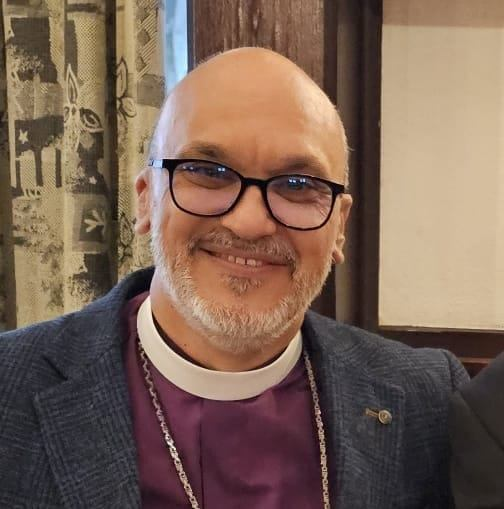
Rt.Rev. Jasmin Milić,Ph.D (Reformed Episcopal Church in Croatia and Serbia)
More about the Reformed Episcopal Church in Croatia and Serbia can be found here.
Discover more from Horizonti vjere
Subscribe to get the latest posts sent to your email.
