
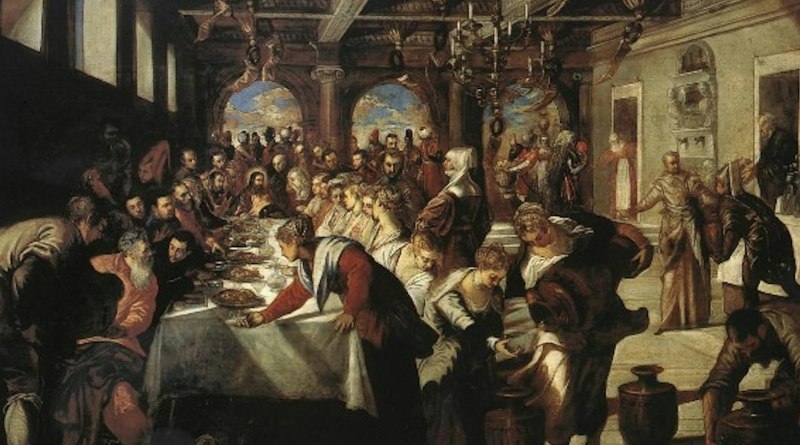
Sermon for the 20th Sunday after Trinity – The Parable of the Wedding Feast
A reflective sermon for the 20th Sunday after Trinity, exploring the parable of the wedding feast — God’s call to salvation, the refusal of many, and the need to be clothed in the righteousness of Christ.
The Collect.
O ALMIGHTY and most merciful God, of thy bountiful goodness keep us, we beseech thee, from all things that may hurt us; that we, being ready both in body and soul, may cheerfully accomplish those things which thou commandest; through Jesus Christ our Lord. Amen.
The Gospel. St. Matthew 22:1-14
JESUS said, The kingdom of heaven is like unto a certain king, which made a marriage for his son, and sent forth his servants to call them that were bidden to the wedding: and they would not come. Again, he sent forth other servants, saying, Tell them which are bidden, Behold, I have prepared my dinner: my oxen and my fatlings are killed, and all things are ready: come unto the marriage. But they made light of it, and went their ways, one to his farm, another to his merchandise: and the remnant took his servants, and entreated them spitefully, and slew them. But when the king heard thereof, he was wroth: and he sent forth his armies, and destroyed those murderers, and burned up their city. Then saith he to his servants, The wedding is ready, but they which were bidden were not worthy. Go ye therefore into the highways, and as many as ye shall find, bid to the marriage. So those servants went out into the highways, and gathered together all as many as they found, both bad and good: and the wedding was furnished with guests. And when the king came in to see the guests, he saw there a man which had not on a wedding-garment: and he saith unto him, Friend, how camest thou in hither not having a wedding-garment? And he was speechless. Then said the king to the servants, Bind him hand and foot, and take him away, and cast him into outer darkness; there shall be weeping and gnashing of teeth. For many are called, but few are chosen.
Sermon for the 20th Sunday after Trinity – The Parable of the Wedding Feast
Before us is the Gospel about the king who prepared a wedding for his son. He sent his first and second servants to call the invited guests to the wedding, but they would not come. Not only did they refuse the king’s invitation, but they “took his servants, treated them shamefully, and killed them.” The king, angered by the guests’ refusal, sent his army against them to destroy the murderers (that is, those who killed his servants) and to burn their city.
When the wedding was ready and the invited guests would not come, the king sent his servants out to the crossroads to invite everyone they could find to the feast. The crossroads were, in fact, the city gates, where foreigners entered and left, and where public life was conducted. The servants invited “both bad and good, and the wedding hall was filled with guests.” The king came in to see the guests and noticed one man who was not wearing a wedding garment. He told him that he could not enter the celebration without the proper attire and punished him for it. Christ ends this parable with the words: “For many are called, but few are chosen.”
This parable reminds us of the Gospel passage about the wicked tenants. Just as the owner of the vineyard sent first one group of servants and then another to collect the fruit, so here the king sends first one group of servants and then another to call the guests to the wedding. The servants in this story fare as those in the story of the wicked tenants. The vineyard owner entrusts his vineyard to other tenants, and in today’s parable the king invites other guests to the wedding feast of his son.
The king in this story is God. The invited guests are God’s people of the Old Covenant—the Jewish nation. The Son is Christ. The servants who summon the guests are the prophets. In the first and second groups of servants we can recognize the four major and twelve minor prophets. The sending of the army against the city is interpreted by many Gospel commentators as the destruction of Jerusalem and the burning of the Temple in A.D. 70. The servants who go out to the crossroads to invite all they find are the apostles and their successors. The new guests are all people, from every nation, tribe, and tongue.
This parable of Christ is rooted in the words of the prophet Isaiah (25:6): “And in this mountain shall the Lord of hosts make unto all people a feast of fat things, a feast of wines on the lees, of fat things full of marrow, of wines on the lees well refined. And he will destroy in this mountain the face of the covering cast over all people, and the veil that is spread over all nations.” What the prophet Isaiah foretold, Christ fulfilled. “This mountain” is the mountain on which the Temple of Jerusalem stood. The Lord sent His disciples to preach the Gospel “in Jerusalem, and in all Judea and Samaria, and unto the uttermost part of the earth” (Acts 1:8). From Jerusalem the message of salvation went forth to all nations.
The Old Testament people of God rejected the prophetic word and Christ—the Son of God and the Messiah. Because they rejected Christ, the gates of the Kingdom of Heaven were opened also to the Gentiles. The king’s words, “Go therefore into the highways, and as many as ye shall find, bid to the marriage,” the Risen Christ repeats in a similar form before His Ascension: “Go ye therefore, and teach all nations, baptizing them in the name of the Father, and of the Son, and of the Holy Ghost” (Matt. 28:19).
It is important to notice that the central figure both in the parable of the wicked tenants and in the one before us today is the king’s son. Christ is in fact speaking of Himself—the Son of God, the promised Savior foretold by the prophets. He is, as we heard in last Sunday’s Gospel, “the chief corner stone” (Matt. 21:42). There is no salvation outside of Christ. The apostle John says: “He that hath the Son hath life; and he that hath not the Son of God hath not life” (1 John 5:12).
The Lord even today, through His Church, calls all people to accept salvation. Unfortunately, many are still like those in the story—occupied with their everyday tasks and worries. Just as they went to their fields and businesses, so today people excuse themselves, saying they have no time for the Church or for Christ because they must work or are busy with other things. The evangelist Luke, in his version of this parable, recounts how the invited guests excused themselves: “The first said unto him, I have bought a piece of ground, and I must needs go and see it: I pray thee have me excused. And another said, I have bought five yoke of oxen, and I go to prove them: I pray thee have me excused. And another said, I have married a wife, and therefore I cannot come” (Luke 14:18–20).
When we ask people today why they do not come to church, they often say they work too much, have too many obligations, or, if by chance they do not work on Sunday, that they need to rest. In such excuses lies the real reason for rejecting Christ. The invited guests in today’s Gospel “would not come.” Many still do not want Christ—they simply will not come to Him. Thus many strive for what is passing away and lose what is eternal, for “what is a man profited, if he shall gain the whole world, and lose his own soul?” (Matt. 16:26).
Satan would draw us into yet another dangerous trap—to say: “There is time; we need not serve God now.” We never know when the Lord will call us to Himself. Orthodox Bishop Nikolaj Velimirović says:
“Let us not delay, then, even for an hour, our repentance. For each coming hour may no longer count us among the living of this world. Let us quickly cleanse and wash our souls at least as often as we cleanse and wash our bodies, which tomorrow will be food for worms. Let us cleanse them with repentance and tears, wash them with fasting and prayer, and clothe them with the garment woven of purity and love, adorned with every good work, especially forgiveness and mercy. Let us do the little that God asks of us, and He will do the rest.”
The Gospel tells us that both the good and the bad came to the wedding. Those who do not attend church services often excuse themselves by saying, “The church is full of sinners and wicked people.” And that is true. The Church is not a community of the sinless, but of sinners; and there is no one in the Church except sinners who need God. Only at the Last Judgment will every person’s deeds be revealed, and the “wheat” will be separated from the “tares” (Matt. 13:24–35). Evil and good will not remain together forever. Therefore, while we are still on earth, we must cast away our filthy garments and clothe ourselves in the garment of Christ’s righteousness. The good news for all those who stay away from church under the pretense that there are greater sinners there than themselves is this: there is always room in the Church for new sinners. They are welcome.
Why is it important to come to church, to the Eucharistic gathering? Because the Eucharist is both the image and the real manifestation of the Kingdom of Heaven. When we do not respond to the liturgical, that is, Eucharistic assembly, we are refusing the invitation of the heavenly King to share fellowship with Him at His table. As Alexander Schmemann writes,
“The Eucharist is not ‘one of the sacraments’ or one of the services, but the manifestation and realization of the Church in all her power, holiness, and fullness. Only by participating in it can we grow in holiness and fulfill what is commanded of us.”
On the other hand, our attendance at the Divine Liturgy should be experienced as our participation in the most important and exalted celebration, and therefore our souls must be properly prepared for the encounter with Christ.
One of the guests at the wedding was not wearing an appropriate wedding garment, and because of that he was punished—cast “into outer darkness; there shall be weeping and gnashing of teeth.” At first glance this seems unfair. This man, like the others, was invited suddenly, without time to prepare properly. Certain commentators explain that the host provided garments for the guests; thus, by not wearing one, the man showed disrespect to the king. The Lord also offers us His own garment. He receives us as we are—sinful, evil, unworthy—but He desires to clothe us in the garment of righteousness, to clothe us in Himself, as the apostle Paul says: “For as many of you as have been baptized into Christ have put on Christ” (Gal. 3:27). The garment which the Lord gives us must be kept clean—through repentance, sacramental and liturgical life, and daily communion with God. The prophet Isaiah says: “Wash you, make you clean; put away the evil of your doings from before mine eyes; cease to do evil; learn to do well; seek judgment, relieve the oppressed, judge the fatherless, plead for the widow. Come now, and let us reason together, saith the Lord: though your sins be as scarlet, they shall be as white as snow; though they be red like crimson, they shall be as wool” (Isa. 1:16–18). Belonging to the Church is both a privilege and a responsibility. How shall we stand before the Lord on the day of His Judgment—clothed worthily or unworthily? Our eternity depends on that.
Today’s Gospel ends with Christ’s declaration: “For many are called, but few are chosen.” The Lord calls all, yet not all will be saved. Many object, saying: If God is love, why does He send people to hell? Why does He not make all both called and chosen—that is, saved? Saint Gregory Palamas says: “How can those who accuse God because He invited even those who did not respond to His call with deeds fail to understand that if He had not called them, they would have blamed Him as the cause of their perdition? He called them so that no one might say that He was the cause of anyone’s destruction. And why did He create such people at all, who would be given over to torment? He did not create men for torment, but for salvation—as is evident from the very fact that He called them. If He had wished to punish anyone, He would not have called all to salvation.” In truth, it is man himself who, by rejecting God, sends himself to hell.
Therefore, instead of excusing ourselves by saying we have no time for God—and by that really telling Him that we do not need Him—let us respond to His call and keep the garment with which He clothes us pure and undefiled. May God help us in this! Amen.
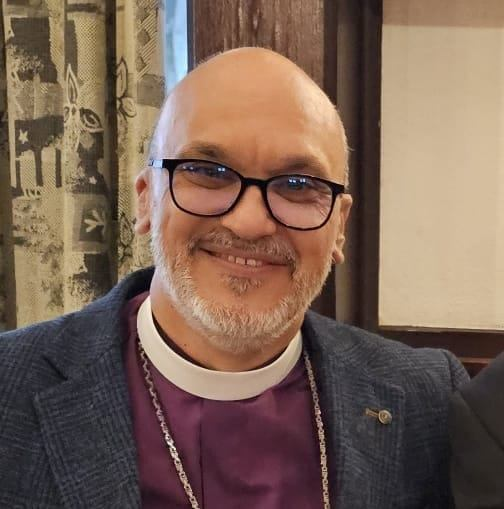
Rt.Rev. Jasmin Milić,Ph.D (Reformed Episcopal Church in Croatia and Serbia)
More about the Reformed Episcopal Church in Croatia and Serbia can be found here.
