

Should a Christian Think About Death?
Should Christians think about death? Reflecting on our mortality can deepen our faith, renew our priorities and help us live more fully in Christ. Drawing on the suffering of Job and the Christian hope of eternal life, Bishop Jasmin Milić considers how illness and suffering can become occasions for repentance, spiritual renewal and a closer relationship with God.
Job said:
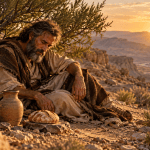
Is there not an appointed time to man upon earth? are not his days also like the days of an hireling? As a servant earnestly desireth the shadow, and as an hireling looketh for the reward of his work: So am I made to possess months of vanity, and wearisome nights are appointed to me. When I lie down, I say, When shall I arise, and the night be gone? and I am full of tossings to and fro unto the dawning of the day.
My days are swifter than a weaver’s shuttle, and are spent without hope. O remember that my life is wind: mine eye shall no more see good.
— Job 7:1–4, 6–7
Among the most difficult questions we face, both as human beings and as believers, are those concerning suffering, illness and, ultimately, death. When we observe others experiencing illness and suffering, those who are dying and those left behind in grief, we may feel that we have all the answers in the Bible and are ready to offer comfort. Yet when we ourselves become ill, especially when that illness brings suffering, we begin to ask afresh why God allows these things. Why should they happen to us, who are faithful to him? “What sin have we committed against God?” “What have we done to deserve this?” These questions become particularly pressing when someone faces an incurable illness and knows that their earthly life is drawing to a close.
The Book of Job, which some biblical scholars consider the earliest biblical book to have been written, portrays the extraordinary suffering of a man who, from our earthly perspective, did not deserve it. He was righteous, God-fearing and exemplary in every way. His illness and suffering, therefore, did not come as punishment but served a deeper purpose. We discover that purpose at the end of the book, when Job testifies that through all his suffering he has come to know God.
Our frailty, bodily weakness, susceptibility to illness and inevitable death are consequences of humanity’s fall into sin and its desire to live apart from God—or without him altogether. We encounter this truth in the opening pages of the Bible. It provides an answer to the origin of suffering, yet it is one that we cannot fully comprehend or easily come to terms with. However familiar this truth may be, when suffering comes, especially to us personally, the question “Why?” arises once again. Beyond this biblical answer, I have no other to offer.
Yet can we also find blessing through our illness and suffering?
Healing the Body
The Bible bears witness to miraculous healings that come either in response to earnest prayer or through a particular act of God’s mercy. Jesus healed many people; at times, we read that he healed everyone who came to him. God is the same yesterday, today and for ever, and he certainly can, wills to and does bring healing today. Yet for Jesus, bodily healing serves a much greater purpose: spiritual healing, or a person’s conversion. His miracles of healing were themselves a proclamation of the gospel—a foretaste of the reality to come.
Christ continues to perform miracles of healing in the same way today. I have personally heard many testimonies of people who came to Christ through being healed.
Today, however, many have turned healing into a “theological business”. Various television healers enrich themselves at the expense of needy and desperate people whose sole purpose in life has become the pursuit of healing. In this desperate longing to be healed, people may come to regard this life as the only one there is. They fight to preserve it and sometimes, without realising it, bear witness to their own lack of faith in eternity.
Healing the Soul
Although illness, suffering and death are, as we have said, consequences of our first parents’ fall into sin, we must also acknowledge that we ourselves contribute to some illnesses. When we neglect our bodies, our diet and physical exercise, when we face stress and generally fail to maintain a healthy physical and emotional life, illness may come as the price we pay.
Sometimes illness jolts us into putting certain things right in our lives. How often, even during this global pandemic, have we heard people say that it might help us return to the values that truly matter?
Yes, for Jesus the soul takes precedence over the body, and illness offers an opportunity to attend to this important aspect of our being. God’s Word teaches us to care for our bodies because they are temples of the Holy Spirit. Ultimately, however, the body is finite and perishable. The soul, by contrast, is eternal. It is therefore vitally important that it should be healthy—that is, in a right relationship with God and with our neighbours. Difficult though this may be to understand, illness can become a great blessing by restoring our appreciation of true and eternal values.
Job’s Reflection on Life
In the passage we are considering, Job speaks of the transience of life. I believe that all of us who have already passed the half-century mark can agree with him. Everything passes—and passes quickly. We live in anticipation of things that will themselves pass away. We wait for something that will soon belong to the past, moving ever closer to our final destination. If a person has no hope, no higher purpose beyond transience and death, then this life is indeed a cruel game. But if our existence reaches beyond this passing earthly life, if our goal is eternal fellowship with the One who called himself the Life, then our earthly life—and everything we encounter within it, including illness and suffering—has meaning.
Illness often interrupts our confident assumption that we are invincible and powerful. Reflecting on the passing of life and on death should not lead us into despair and depression, but towards a richer and more fulfilling life.
The Remembrance of Death
The Church Fathers spoke of the “remembrance of death” (Lat. memento mori, Gr. mneme thanatou). This is not a masochistic desire to die. Life and death are in God’s hands, not ours. Rather, remembering death helps us to die daily—to die to sin, to die to the false values of this world and to live life to the full in Christ.
Speaking of his approaching end, the Apostle Paul says that the time of his departure is near, that he has fought the good fight, finished the race and kept the faith, and that the crown of righteousness—the victor’s crown—is laid up for him (2 Timothy 4:6–8).
How much thought do we actually give to the kind of people we will be when we leave this world, to what we will leave behind and to the values we will pass on? Do you realise that some people continue to bear witness to God even after their death? In one of our prayers, we thank God for the departed and for the good example they have left us. When we remember our parents as those who taught us about God, or when we remember great figures of faith who still speak through the works they left behind, we encounter a powerful and enduring witness to God.
Remembering death means living responsibly and fully until the Lord calls us home. The fact is that we, too, must die. Yet blessed is the death of those who die in the Lord. In my ministry, I have often been with people who were dying, sometimes only a few hours before they departed this earthly life. I can testify that those who belong to Christ die a blessed death, while dying is difficult for those who have lived without God and leave this world without him.
The remembrance of death leads us daily to repentance, to an examination of our own lives and to serious reflection on how we will stand before God.
None of us should seek illness, suffering or affliction, or “rush headlong into martyrdom”. On the contrary, we should do everything within our power to care for our health and live well. Yet when God allows something we would not have chosen to come upon us, he knows why he has permitted it. Our task is to turn that situation to our spiritual benefit and seek healing for our eternal being—our soul. Amen.
Author: Bishop Jasmin Milić


Discover more from Horizonti vjere
Subscribe to get the latest posts sent to your email.
