
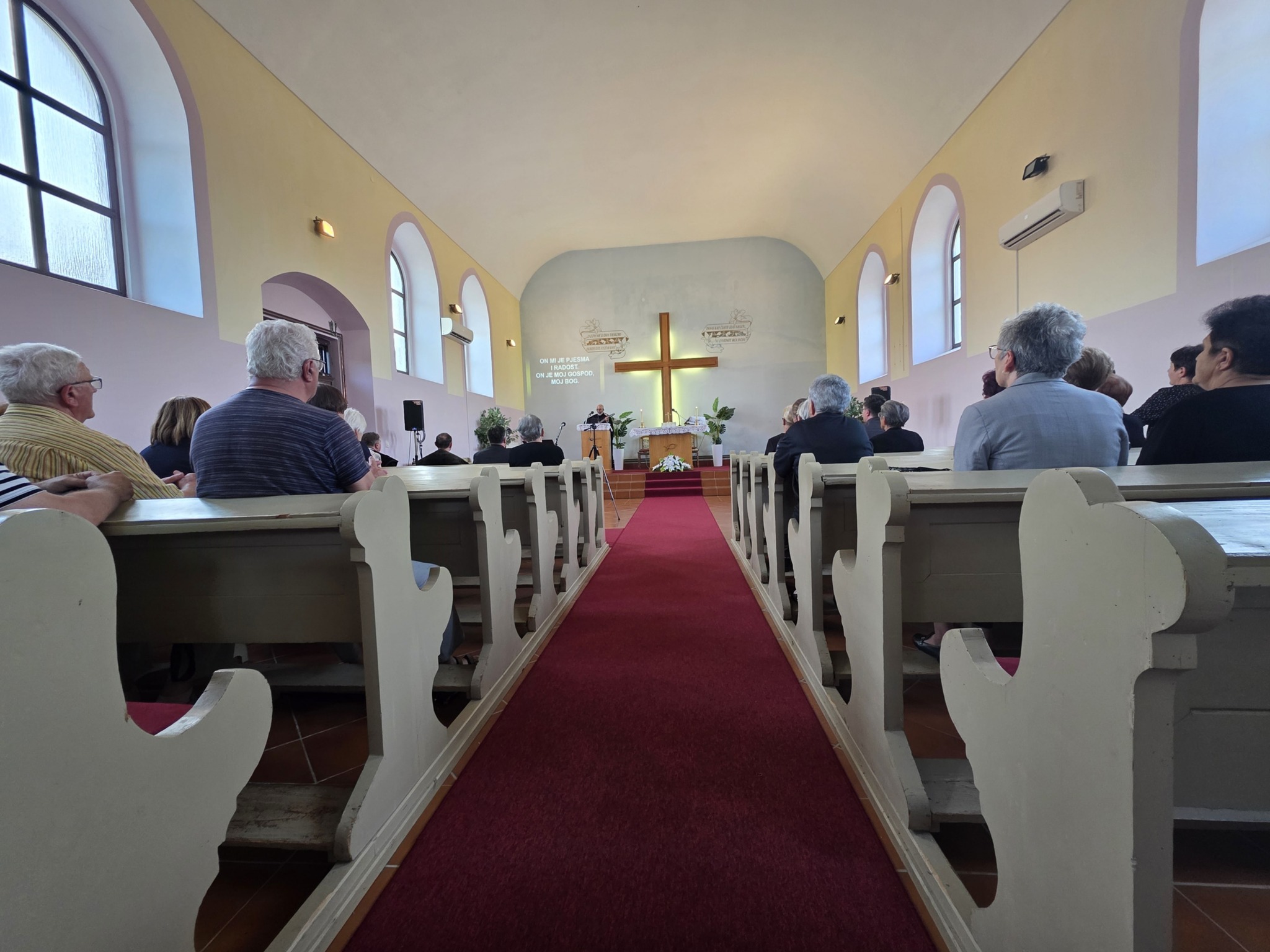
Can One Be a Christian Without the Church?
Many today claim that one can be a Christian without the Church. But is that truly possible?
At the very beginning of this reflection, let us say what the Church is. The Greek word for Church is ekklesia, which we translate as community or assembly.
In the New Testament understanding of the Church, we can clearly see that it speaks of both the universal Church and the local church. The universal Church consists of all believers who also belong to local churches (the Church in Jerusalem, Antioch, Rome, Corinth, etc.). Later, the place where believers gathered for regular worship also came to be called a church, since that place became sanctified through the worship of the Lord.
Here we will primarily deal with the question of whether the church (when we speak of the universal Church, we capitalize it; when we speak of the local church, we use lowercase), that is, a concrete community of believers in a particular place, is necessary for us today; and if it is, what its characteristics are according to the New Testament.
You have probably often heard the statement: “I don’t have to go to church to pray to God. I can pray at home or anywhere else.” Many who make such statements, however, in reality do not pray anywhere.
Some know that attending common worship in church is necessary, but claim to be too busy, or neglect the fellowship of God’s people out of laziness.
As church services are now easily available online, there are also those who prefer to stay at home with their computer, listening to sermons instead of participating in the fellowship of believers and the common worship of the Lord.
There are also those who claim to be believers but consider every organized church unnecessary, even apostate, maintaining that “church” exists wherever “two or three” sincere believers gather — whether in a house or elsewhere. Such attitudes, promoted by self-proclaimed virtual “preachers” and “prophetesses,” are increasingly widespread on social media.
Since it is Christ who saves and not the Church, does that mean the Church is irrelevant to our salvation?
Do we, then, need an organized church? The Reformers spoke of the invisible and the visible Church. This confuses some people, who ask: “What kind of Church is invisible?”
When the Reformers spoke of the “invisible Church,” they simply meant those who truly belong to Christ, whom only God knows. They are “invisible” not because they are unseen in the world, but because what is visible to God is not always visible to us, and what is outwardly visible to us may not be how God sees it. “The Lord knows those who are His” (2 Timothy 2:19). However, the Reformers were much more concerned with the “visible” — that is, the concrete and organized Church, which is the Body of Christ on earth.
Whoever belongs to Christ also belongs to His Body — that is, the universal Church — but that universal Church is realized in concrete, visible fellowship, that is, the visible church. When we say that one cannot belong to Christ without belonging to the visible Church, we are not saying that belonging to a local church is enough to belong to Christ. One can belong to a visible church and not belong to Christ. But one cannot truly belong to Christ and not belong to His Body in the visible Church.
The New Testament also speaks generally of the Church (the Universal Church), composed of concrete congregations — communities of believers that were mostly founded in cities. We therefore believe that the Universal Church is realized in the concrete, organized church — in a specific time and place.
Do we need to be part of such a church, to serve within it with our gifts, to participate in worship — or is it enough merely to believe in Christ and gather occasionally with a few like-minded people at home for prayer?
To understand this crucial question, let us start from the beginning.
Jesus as the Founder of the Church
“…You are Peter, and on this rock I will build my Church, and the gates of hell shall not prevail against it.” (Matthew 16:18). The Rock is, in fact, Christ Himself. Peter confessed that Jesus is the Christ, the Son of the living God. Upon that confession of faith, the Church is built.
Jesus Chose Twelve Apostles
No one could declare himself an apostle. Only those called by Christ to this ministry received the apostolic title and mission. They acted as an organized community of Christ’s disciples. Their roles within that fellowship were known, and they even had a treasurer. The fact that the treasurer (Judas) was not honorable does not mean that he was not called to the office of apostle, or that he was not one.
The Apostles Continued Christ’s Work
Before ascending into heaven, Jesus entrusted His authority to the apostles. He did not gather all His disciples — of whom there were many more than eleven after Judas’s death — but spoke only to the apostles, giving them the mandate to go, preach, make disciples, and baptize them (Matthew 28:19–20).
The Acts of the Apostles — The History of the Church’s Organization
The Book of Acts, which follows the Gospels, begins with Jesus’ instructions to the apostles, His ascension, and the coming of the Holy Spirit upon them. The apostles, as Christ’s chosen representatives, had a central role in the beginnings of the Church.
The Life of the First Christian Community
The Book of Acts describes the life of the first Christian community:
“They devoted themselves to the apostles’ teaching and fellowship, to the breaking of bread and the prayers. And awe came upon every soul, and many wonders and signs were being done through the apostles. All who believed were together… Day by day, attending the temple together and breaking bread in their homes, they received their food with glad and generous hearts, praising God and having favor with all the people. And the Lord added to their number day by day those who were being saved.” (Acts 2:42–47)
From this we clearly see that from the very beginning the Church functioned as an organized body:
– It preserved apostolic teaching (doctrine).
– It nurtured fellowship.
– It celebrated the Eucharist (the breaking of bread, the Lord’s Supper).
– It held regular worship and prayer, both in the temple and in homes.
The organization of the Church developed under apostolic leadership and oversight.
The Establishment of the Diaconate
We see this in the establishment of the office of deacons. The apostles called the disciples together and presented to them the problem of helping the needy, especially widows. The apostles emphasized that their primary calling was to preach the Word, and therefore a new office should be established — the diaconate. The deacons were chosen, and the apostles laid hands on them, thus ordaining them to their ministry.
The Apostle Paul Had to Be Recognized by the Apostles
What about the Apostle Paul? Was he not called directly by Jesus, independently of the other apostles? Yes, he was — yet even so, he did not act independently of the others or of the Church. He was baptized (Acts 9:18) and entered into fellowship with the apostles — in other words, with the Church.
Elders (Presbyters)
In the Acts of the Apostles we also find mention of elders (presbyteros in Greek), and from the context it is clear that they were leaders of Christian congregations (local churches). The community’s contributions were sent to them (Acts 11:30), and they were appointed by the apostles as overseers of the churches (Acts 14:23).
The Council of Jerusalem
When some began to teach that Christians needed to be circumcised, the first Church Council — the Council of Jerusalem — was convened. There the apostles and elders had leading roles. Together they made decisions and chose brothers to send to Antioch, along with a letter confirming their authority and emphasizing the apostolic and presbyteral ministry (Acts 15).
The Decrees of the Apostles and Elders
The churches were to observe the decrees established by the apostles and elders at the Council of Jerusalem. These decrees were binding for the entire Church (Acts 16:4).
The Elders’ Responsibility
In Acts 20, the Apostle Paul exhorts the elders to watch over themselves and over the flock entrusted to their care (Acts 20:28), warning them of false teachers who would arise even from among themselves.
Looking at the entire Book of Acts, we see that the Church is an organized community of believers. In the Church:
– The apostles held leadership roles.
– Two additional ministries were instituted: the diaconate and the presbyterate.
– Local churches were organized and led by elders.
– Regular worship included the preaching of the Word and the breaking of bread (the Eucharist).
– The Church preserved apostolic doctrine.
– When doctrinal disputes arose, councils were convened whose decisions were binding for the whole Church.
The Church in the Epistles
Most of the epistles were written to churches — the Church in Rome, in Corinth, in Galatia, Ephesus, Philippi, Colossae, and Thessalonica. This alone shows the importance of the concrete, visible, local church. The Apostle Paul wrote to organized churches, giving them doctrinal, practical, and disciplinary instructions. He wrote with authority, and the very fact that his letters were included in the canon of the New Testament testifies to their significance for the whole Church.
The Apostles Transmit and Interpret the Faith
Believers could not believe or teach according to their own whims. The apostles instructed them “in what they had received from the Lord” (1 Corinthians 11:23). Anything contrary to this, Paul calls “another gospel” (Galatians 1:6).
God Gives the Church Special Ministries
God gave different ministries to the Church so that those called to them might “equip the saints for the work of ministry, for the building up of the body of Christ” (Ephesians 4:11–12).
Gathering for Regular Worship
As we have already mentioned, believers initially gathered both in the temple and in homes (as they had no dedicated buildings yet), with the purpose of hearing the Word, breaking bread (the Eucharist), and presenting their offerings. The author of Hebrews warns against neglecting “to meet together, as is the habit of some” (Hebrews 10:25).
Problematic Churches — Yet Still Churches
The Church in Corinth was deeply problematic — with divisions, immorality, and false teaching. Yet it remained a church. Individuals who continued in unrepentant sin would not inherit the Kingdom of God, but their misconduct did not invalidate the existence or necessity of the church in Corinth.
The Church in Galatia also faced serious doctrinal errors. Instead of relying on grace, they turned to the Law and believed Christians must observe Old Testament regulations. Yet Paul did not deny them the identity of a church. The “visible church” will always be a mixture of true and false believers. Any attempt to perfectly separate “wheat from tares” here on earth is doomed to fail. The final separation will take place only on the Day of Christ’s great judgment.
Church Discipline
Problematic leaders and members who reject apostolic doctrine or persist in public sin must be disciplined. Jesus Himself gave instructions for this in Matthew 18:15–18, granting authority to His apostles to “bind and loose,” that is, to impose and lift disciplinary measures.
Order in the Church
There must be order in the Church — in doctrine, in community life, and in worship. In Corinth, where spiritual gifts such as speaking in tongues and prophecy were practiced, Paul imposed order and subjected the exercise of gifts to discipline (1 Corinthians 14). In the context of worship, he declares that God “is not a God of disorder but of peace” (1 Corinthians 14:33).
Ministers of the Church in the Pastoral Epistles
The importance of preparation for ministry and the significance of church offices are evident in the Pastoral Epistles (1 & 2 Timothy and Titus). Why would such detailed attention be given to pastoral ministry if it were unnecessary?
Timothy was Paul’s disciple and was ordained by him for ministry. Paul instructs him regarding the dignity and qualifications of the overseer (episkopos — bishop) (1 Timothy 3:1–7), and likewise concerning the qualifications of deacons (1 Timothy 3:8–13).
Even though Timothy was young, the church community was to respect him, and he was to be an example (1 Timothy 4:12). He was to devote himself to reading, exhortation, and teaching (1 Timothy 4:13), and to entrust the ministry of the gospel to “faithful men who will be able to teach others also” (2 Timothy 2:2). He was to guard sound doctrine, avoiding “profane and empty babblings” which “spread like gangrene” (2 Timothy 2:16–18).
Timothy was charged to preach the word, to reprove, rebuke, and exhort (2 Timothy 4:1–2). A time would come when people would not “endure sound teaching,” but would “accumulate for themselves teachers to suit their own passions” (2 Timothy 4:3). Timothy was to endure suffering, fulfill his ministry, and remain faithful to the end (2 Timothy 4:5). Church tradition records that after Paul’s martyrdom, Timothy became bishop in Ephesus.
Titus, likewise, was Paul’s co-worker, called “my true son in our common faith” (Titus 1:4). He worked in Corinth to ensure the Corinthians accepted Paul’s corrections (2 Corinthians 7:7, 13–15). Titus was sent to Crete “to put in order what was left unfinished and appoint elders in every town” (Titus 1:5). Paul instructs him about the qualifications of such elders (Titus 1:6–9). Early church tradition records that Titus became bishop of Gortyna in Crete.
In post-apostolic times, the office of bishop (episkopos) was understood as the direct continuation of apostolic authority, and bishops themselves appointed their successors.
From the context of the Pastoral Epistles, it is clear that no one could appoint himself to ministry; he had to be confirmed and ordained by the apostles or their successors.
The Role of Elders in the Epistle of James
The Apostle James instructs sick believers: “Is anyone among you sick? Let him call for the elders of the church, and let them pray over him, anointing him with oil in the name of the Lord.” (James 5:14). Thus the elders (presbyters) not only lead public prayer, but also care for the faithful in their needs.
Conclusion: One Cannot Be a Christian Without the Church
Despite the sad divisions within the Church, the Church has not disappeared from the earth. As Jesus said at the beginning, “the gates of hell shall not prevail against it.” Therefore, if we claim to believe the Bible, the biblical model of the Church must be the one we seek — a visible, concrete, local congregation.
A believer in Jesus Christ cannot live apart from a visible, tangible community of believers — that is, from the real, visible Church. The Church was established by Christ Himself, organized in the Acts of the Apostles, and governed by the apostles and those whom they appointed.
The Church must have the characteristics described in Acts:
a) A Church led by the apostles and their successors, grounded in apostolic teaching;
b) A Church of fellowship;
c) A Church in which the ministries of apostles (their successors), presbyters, and deacons function — those who, though in fellowship with believers, have leadership roles;
d) A Church in which the Word is preached and the sacraments (baptism and the Eucharist) are administered;
e) A Church that exercises discipline.
In the New Testament understanding of the Church, there is no place for the idea that “two or three” gathering independently of all this constitutes a church. When two or three are gathered in prayer, Christ is indeed among them — but that is not the Church. The Body of Christ is not a place of disorder, but of order. It is an organized, living organism — as the human body must be coordinated for all its members to function properly. The Body of Christ is both a living organism and an organization, as is clearly evident throughout the New Testament witness.
In the New Testament understanding of the Church, there is also no place for anyone to appoint himself as an authority, apostle, or pastor.
To turn away from the Church is to turn away from Christ. The Church is His Body. Jesus identifies Himself with it. When He met Saul, the persecutor of the Church, on the road to Damascus, He did not say, “Why do you persecute my followers?” but, “Why do you persecute Me?” (Acts 9:4).
To believe that one can belong to Christ apart from the organized community of believers, as presented in the New Testament, is unbiblical. It is, in fact, heresy — a false teaching. And we are not called to embrace false teaching, which can only be promoted by the enemy of the Church — and we know who he is — but to accept the apostolic doctrine and apostolic practice.
Although many parts of the Church are sadly deformed, poisoned by false doctrine, corrupt practices, and moral failures — as was already the case in the New Testament Church — the Church of Christ remains visibly present on earth.
If we know the New Testament criteria for the Church, then we will be able to recognize it even today.
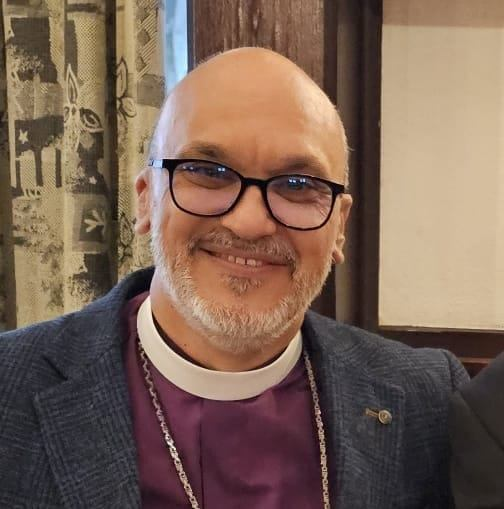
Rt.Rev. Jasmin Milić,Ph.D (Reformed Episcopal Church in Croatia and Serbia)
More about the Reformed Episcopal Church in Croatia and Serbia can be found here.

Discover more from Horizonti vjere
Subscribe to get the latest posts sent to your email.
