

Christ and What We Think of Him – A Sermon on Matthew 16:13–19
Introduction
There are few questions more important than the one Jesus asked His disciples: “Who do you say that I am?” This question is not merely academic—it is personal, urgent, and eternal. Throughout history, people have offered many answers, yet only one leads to life. In this sermon, we turn our hearts and minds to consider not only what others say about Christ, but what we truly believe about Him—and why that confession matters more than anything else.

Christ and What We Think of Him – A Sermon on Matthew 16:13–19
Christ Cares About What Others Think of Him
Of course, this cannot be compared to our own need for others to have a good opinion of us. We are often saddened when someone doesn’t appreciate us, doesn’t love us, or gossips about us—when others don’t think of us the way we would like them to. Naturally, it’s pointless to expect that everyone will think the same of us, that everyone will like us, or that all will think only good things about us. And truly, that is not entirely up to us.
Are Others’ Opinions Always Important?
People are different. They have different perspectives, temperaments, characters, levels of education, worldviews, religious beliefs—or no faith at all. And that also influences their opinions of us. Therefore, we should never be overly burdened by what others think. For our part, we must strive not to give anyone a reason for a justifiably poor opinion of us, but in the end, as I said, not everything depends on us.
But Jesus is not burdened by this. He knows who He is. He knows why He came into the world. He knows that not everyone will look kindly upon Him or accept Him. And indeed, He had more enemies than friends. They said all sorts of things about Him, compared Him to the devil, accused Him of breaking both religious and civil law, and claimed that He made Himself equal with God—that is, that He was blaspheming. Jesus accepted all of this, knowing that His work—and He Himself as a person—divides people: some will accept Him, others will reject Him. In the end, He will be the one to make the final division—between those who are His and those who rejected Him. It is precisely for this reason, before that final judgment, that Jesus desires for as many as possible to accept Him as Lord. That is why He cares about others’ opinions—not to feed His own ego, but for the eternal life of those who recognize Him as Lord.
Our Opinion of Christ Matters—Not for Him, but for Us
Indeed, it is not insignificant what we think of Christ, or what our view of Him is. This is not important for Him, but for us. Our view of Christ is of the utmost importance for eternity.
Hardly anyone is completely without an opinion about Christ. Generally, people have their own views—often very strong and deeply ingrained—about politics, sports, medicine (for example, during the coronavirus pandemic, everyone “knew everything” except the scientists), and of course about religion—and thus, about Christ.
Is It Possible That Christ Never Existed?
Some—though very few—claim that He never existed. That would make the story of Christianity rather peculiar: someone who never existed inspired the apostles to preach about a non-existent person, and not only to speak of Him, but for almost all of them (except the Apostle John) to suffer martyrdom for Him. For someone imaginary? Clearly, such a theory is, at the very least, unserious.
Just a Religious Founder?
Others believe that Jesus was merely the founder of a religion. But if that’s the case, then Christianity is a phenomenon unlike any other. A young man who didn’t reach the age of 34, with no formal education, no significant followers—just twelve apostles, mostly inexperienced young men—without an army, without political power or influence, managed to proclaim and establish a religion that has remained the leading faith in the world to this day (nearly a third of the global population identifies as Christian).
A Revolutionary?
Some acknowledge Christ’s existence but don’t wish to accept Him in a strictly religious sense. They claim He was a revolutionary who aimed to free His people from Roman occupation. But neither the Gospels nor history present such a Christ. If that had been the case, it’s unlikely anyone would remember Him today. He would simply be one of many failed resistance leaders who paid with their lives for rebellion.
A Prophet?
For some, Jesus is merely one of the prophets. This is how He is regarded in other religions—for example, in Islam. But He was different. He spoke with the authority of God Himself (“I say to you”), performed works only God could perform (for example, forgiving sins, raising the dead, etc.). Jesus was far more than a prophet.
Such diverse opinions about Christ were also held by His contemporaries. Those opinions reported by the disciples to Jesus still framed Him within a religious context. For them, He was a man of faith—more than that: some saw Him as Elijah, whom they believed would appear before the coming of the Messiah; others thought He was Jeremiah, or John the Baptist who had already been executed, or one of the prophets. They recognized that Jesus was different, special—but still didn’t fully grasp who He truly was.
Christ Cares What the Apostles Think of Him
After hearing what others think of Him, Jesus turns to His disciples: “But you—who do you say that I am?” It is vitally important to Christ that His disciples have the correct view of Him. They will carry on His work on earth, they will proclaim the Good News, and at the center of that Good News is Christ. If they misunderstand Him, their message will be flawed.
Naturally, who else would respond but Peter. His nature was such that he liked to stand out, to take the lead. He likely cared deeply that Christ held the best opinion of him. He wanted to be the best in Christ’s eyes. He had a competitive spirit in him. Christ, of course, would use that for His glory.
Peter answers: “You are the Christ—the Anointed One, the Son of the living God.”
The Anointed One
“You are the Anointed One.” In our translation, this reads “Christ—the Anointed One” (sometimes just “Christ”), but “Anointed One” is actually the translated meaning of the Greek term Christos, which means Messiah. Peter, therefore, confessed that Jesus is the Messiah. And in those days, this was a bold and profound revelation. There could only be one Anointed One, and only One remains—the Christ, the Messiah—even though in recent times many claim that title for themselves. Anyone who calls himself an “anointed one” is, in fact, claiming to be the Christ. Jesus warned against such people, saying that false anointed ones will come, saying:
“For many shall come in my name, saying, I am Christ; and shall deceive many.”
(Matthew 24:5, KJV)
Peter testified to his faith in Christ as the Messiah. This meant that He was the promised Deliverer, that the hope of Israel had finally been fulfilled, that the time of waiting had come to an end. He is the fulfillment of God’s promises, the only Saviour.
The Son of the Living God
Jesus is often called the Son of Man—and even refers to Himself this way. But here Peter recognizes Him not only as the Son of Man but also as the Son of God. “Son of Man” refers to His human origin; “Son of God” speaks of Christ’s divine nature.
Thus, the titles “Son of Man” and “Son of God” reveal His two natures—human and divine. However, His divinity can only be revealed to those to whom the heavenly Father grants this insight.
The Truth About Christ—A Divine Revelation
“Blessed art thou, Simon Barjona: for flesh and blood hath not revealed it unto thee, but my Father which is in heaven.”
(Matthew 16:17, KJV)
Opinions about Christ vary, but only divine wisdom and the work of the Holy Spirit can lead a person to a true understanding of Christ.
Christ Cares About Our Personal Faith
It is good to know what others think of Christ, what the Church teaches about Him, what theologians have written—but if our personal witness of Him is not right, then the opinions of others, even official Church teachings, will mean nothing to us. That’s why Jesus often emphasizes personal faith. And in this case, it is personal faith—personal recognition and knowledge of Christ—that is important. Of course, this faith must not be arbitrary or based on our own worldview. It must align with Christ’s true identity; we must truly know Him, and that must be our firm conviction. Thus, personal—but correct—faith is saving faith. Our eternal life depends on our faith in Christ:
“And this is life eternal, that they might know thee the only true God, and Jesus Christ, whom thou hast sent.”
(John 17:3, KJV)
Thou Art Peter—The Rock
This passage is a favorite among our Roman Catholic brothers when speaking about Peter’s primacy and the popes as his successors. For them, Peter is the first pope. He received the keys to the kingdom of heaven and the authority to bind and loose sins—authority passed on to his successors.
But what is truly important here? Is Peter the focus—or the One whom Peter confessed? Is the Church built on Peter or on Christ?
Here, Peter confessed the truth about Christ. Christ is the Messiah. Christ is God. These are the key truths about Christ that the Church must proclaim until His return. And it is upon these truths—upon the correct understanding of Christ—that the Church is founded. He is, in fact, the Rock—the One whom Peter rightly confessed.
The Gates of Hell Shall Not Prevail Against the Church
In Christ’s time, “gates” symbolized strength or power. The stronger the gates of a town or village, the safer its people were. The power of hell is strong, but Christ’s power is greater—for among other things, He says of Himself:
“Verily, verily, I say unto you, I am the door of the sheep.”
(John 10:7, KJV)
The power of hell is the grave, death. But this power could not hold or overcome Christ. Likewise, death has no final word over those whose life is Christ. That is why the Apostle Paul exclaims:
“O death, where is thy sting? O grave, where is thy victory?”
(1 Corinthians 15:55, KJV)
The Church is the body of Christ. It is both a divine organism and a divine organization. As such, it will endure until the glorious return of Christ. It may have its weaknesses, sins, divisions, and imperfections (as long as it is on this earth), but it is the precious Bride of Christ, and the Lord will not allow it to perish. And indeed, we see that nothing has overcome it—not the severe persecutions from the very beginning, nor the divisions, ideologies, or political systems. The Church is invincible because the Holy Spirit is its guardian, as we sing in one of our hymns.
The Keys of the Kingdom of Heaven
What about the keys? Were they given to one man or to the Church? Here Peter represents all the apostles—that is, the Church that confesses the true faith in Christ. The same words spoken to Peter, Christ later says to all the apostles:
“And when he had said this, he breathed on them, and saith unto them, Receive ye the Holy Ghost:
Whose soever sins ye remit, they are remitted unto them; and whose soever sins ye retain, they are retained.”
(John 20:22–23, KJV)
Thus, the apostles were the bearers of the Church’s authority. This invincible Church has divine authority to proclaim the Gospel, to announce the forgiveness of sins—and also to declare the withholding of forgiveness when the conditions for forgiveness are not met. Church discipline was important even for the early Church. And according to Jesus’ words, this was linked with “binding” and “loosing”:
“Verily I say unto you, Whatsoever ye shall bind on earth shall be bound in heaven: and whatsoever ye shall loose on earth shall be loosed in heaven.”
(Matthew 18:18, KJV)
In that sense, the Church either forgives or retains sins.
Naturally, the Church acts solely by Christ’s authority and through its properly chosen and ordained ministers—the successors of the apostles. The power of the keys lies in proclaiming the Gospel, as the Augsburg Confession affirms:
“…the power of the keys or the power of the bishops is really the power or command of God to preach the Gospel… This power is exercised only through teaching or preaching the Gospel and administering the sacraments to many or to individuals…” (Article 28)
Speaking on the subject of the keys in the context of church discipline, Bishop Edward Harold Browne writes:
“Now we have seen, that our Lord committed to His Church the keys of discipline, the power to bind and to loose. … To St. Peter, the first and most honoured of the college of the Apostles, He promised, ‘I will give unto thee the keys of the kingdom of Heaven …’ And the power which He thus bestowed on St Peter, He afterwards yet more solemnly conveyed to all the Apostles, and apparently with them to other elders of the Church … The power to bind and to loose was the same as the Church’s power to bind and to loose. And the power to retain and to remit sins, was but the same authority conveyed in different terms.”
The sacraments (Baptism and the Lord’s Supper) are inseparable from the proclamation of the Gospel, as they were instituted by Christ and commanded in the Gospels. The apostles administered the sacraments and passed on this ministry to their successors.
Christ is the Head of His body—He Himself acts through His Church. Therefore, those outside the visible Church are outside of Christ—and outside the forgiveness which Christ offers through His grace.
May our faith in Christ be such that we truly recognize in Him the Saviour. Amen.
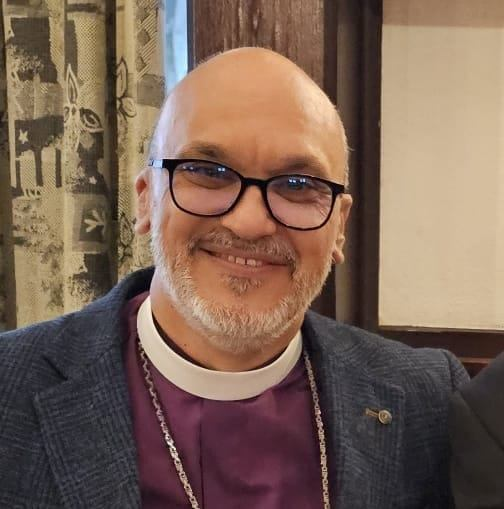
Rt.Rev. Jasmin Milić,Ph.D (Reformed episcopal Church in Croatia and Serbia)
More about the Reformed Episcopal Church in Croatia and Serbia can be found here.
