
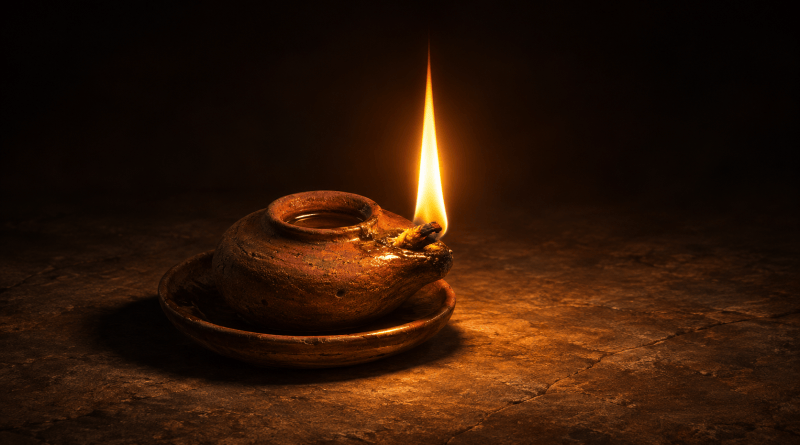
Ten Virgins Awaiting the Bridegroom
This is an original sermon by Bishop Jasmin Milić on the parable of the ten virgins, for the Thirty-Second Sunday in Ordinary Time, Year A, based on the ABC Lectionary. AI was used solely to translate the sermon into English, as English is not the author’s native language.
Ten Virgins Awaiting the Bridegroom
This Sunday’s biblical readings, especially the Gospel account of the ten virgins, invite us to reflect on our encounter with the inevitable: our encounter with death. The purpose of God’s Word is not to make us depressed or afraid, but to give us a sure hope as we face what none of us will escape—unless we are still alive when Christ returns. That, of course, remains possible, but it is not for us to speculate about it. Rather, we are to prepare ourselves to meet the Lord, whether through our departure to be with him or through his coming to us.
Those Who Fall Asleep in Jesus Are Those Who Live in Jesus
In 1 Thessalonians 4:13–18, the Apostle Paul calls us to a sure hope concerning those who have “fallen asleep in Jesus.” Those who fall asleep in Jesus are those who have lived in Jesus. The two cannot be separated. Life with Jesus does not begin at some future point in eternity, but now, in this life, in this body. Here we receive the light that enables us to pass safely even through the darkness of death.
Our present life is a mirror of eternity. Christ has provided us with every means of sure hope and eternal life. Above all, he has given himself as the atoning sacrifice through which he takes all our guilt upon himself. Without that sacrifice, we would all be condemned to eternal death—that is, eternal separation from God. Without his sacrifice on the cross, we could never be saved for eternity, because we ourselves are incapable of doing anything that could appease God, who, although he is the God of love, is also the God of justice and justly punishes rebellion against him.
Life in the Spirit
Yet, so that we may persevere in our walk with God, and so that ours may be a life of sanctification and light in which we recognise God’s Word and his will for our lives, God gives us oil. In God’s Word, oil is often a symbol of the Holy Spirit. The Holy Spirit, who is God present among us today, is the one who works salvation, repentance, sanctification and perseverance. The Holy Spirit works in us both the desire and the ability to act in ways that please God—that is, to live according to his will. In this sense, our good works are, in fact, the fruit of God’s Spirit. The Holy Spirit also gives us the gifts we need to serve God and our neighbours.
See also: Here Is the Bridegroom! Come Out to Meet Him!
That is why oil—that is, an ongoing life in the Spirit—is central to the parable of the ten virgins in today’s Gospel reading (Matthew 25:1–13). This is the life to which the Apostle Paul calls us in Galatians 5:16–24.
The Ten Virgins Represent Believers
When we reflect on the ten virgins, we are really considering two groups of people who regard themselves as believers. Those who openly acknowledge their unbelief think about life and death very differently from believers. They live as though this life were the only reality. Many of today’s motivational speakers, influencers and other contemporary gurus seek to convince them that this life is all there is and that they should take everything they can from it. As some would say, “Life has no reruns,” or, “Take everything life has to offer.”
When facing death, they have no hope, having accepted their conviction that everything ends there and that nothing follows death. Some may have their own theories about continuing to exist as some kind of energy or something similar, but this is far removed from the Christian hope of a continuing, real life with God.
Among those who regard themselves as Christian believers, however, and who know that there is life after death, we encounter two groups.
The Foolish Virgins
The first group—which, we may freely say, is larger and more widespread—is represented by the foolish virgins. These are the “believers” whom we call nominal Christians. They have been baptised, have received certain other rites and sacraments, and identify themselves as members of one Christian church or another. Occasionally, at least at Christmas or Easter, they turn up at church.
Yet their lives are far removed from a sanctified Christian life. They do not even strive to live by the Spirit. Their motto is, “It’ll all work out,” or, “I believe, but I don’t take it too far.” Although their lamps received that initial light, that seed of faith at baptism, through religious instruction and so on, they are slowly going out because the oil is not being replenished.
This does not trouble them. They are unconcerned about how they live. They have no interest in the Gospel, no desire to worship God in the fellowship of his people, and no felt need for prayer or the study of God’s Word. They will fulfil all the outward requirements. They will pay whatever is expected for the church, welcome the priest into their home and declare their membership of their church. But do not ask them to live by the Spirit—that is, to replenish their lamps with oil.
They too know that they will die, and they know that there is something after death. Yet they expect the same approach to work after death as it did during their lives: “It’ll all work out.” This false hope is astonishing, as is the ease with which such people are placed in Paradise, in heaven. We know their lives; we know that they lived foolishly and unwisely. Yet we picture them with the angels, or even turn them into angels in heaven ourselves.
Another striking feature is that the foolish virgins—believers of this kind—rely on the wise virgins: “They have enough for us too. Why should we trouble ourselves? We’ll take some of theirs.” This is the false hope that many cherish: that the good works of others will deliver them from purgatory and enable them to enter Paradise.
The folly of the foolish virgins becomes even more striking in those who, during their lifetime, build “mausoleums” for themselves or invest in the construction of churches. They will do everything to secure eternal life, provided they do not have to live by the Spirit. But God cannot be bribed. The only price paid for our eternity is Christ’s sacrifice. Every attempt we make to bribe God is a mockery of God and of his sacrifice.
The Wise Virgins
The second group consists of those believers who have received a lamp and in whom the Spirit of God is powerfully at work, enabling them to live for the Lord and to begin their eternity with him now. They constantly seek the light. They desire the light of Christ in their lives because they know that, in the darkness of this world, they can see clearly only with Christ. They take seriously the Lord’s words through the Apostle Paul:
“Look carefully, then, at how you live—not as foolish people but as wise, making the most of the time, because the days are evil. Therefore do not be foolish, but understand what the Lord’s will is. Do not get drunk with wine, which leads to debauchery, but be filled with the Spirit.”
(Ephesians 5:15–18)
They do not leave things to chance. They do not live in false hope, waiting for help from others. They joyfully await their meeting with the Lord, knowing that the price of their eternity has been paid in full. Their anticipation of eternity is not marked by uncertainty or by attempts to slip into heaven through some indirect route. They go joyfully to meet the bridegroom. Even if they happen to fall asleep, their lamps will keep burning.
The Foolish Think They Are Wise and Regard the Wise as Fools
Those who behave like the foolish virgins—who claim to be Christians only outwardly and nominally—often regard those who strive to live out their faith as fanatics, fools or zealots. They may even present themselves as better, more progressive believers than those who seek to live out their faith by the Spirit. Thus, the wisdom of this world regards as fools those who belong wholly to Christ, as Paul tells us in 1 Corinthians 3:19.
False Hope Will End in Disappointment, but Those with Oil Will Enter into Joy
When the bridegroom comes, only those virgins who are wise and have oil will enter into their Master’s joy. Those who have lived with Christ will continue to live with him in eternity. Those who have lived by the Spirit will experience the fullness of eternal life.
Those who maintained outward forms of godliness but were not being filled with the Spirit will face disappointment on that day, because the Lord will say, “I do not know you.” No help will come from either the dead or the living. There will be no hope of relying on someone else’s oil. They will not slip through.
That is why Jesus warns us: “Keep watch, therefore, for you know neither the day nor the hour” (Matthew 25:13). As one hymn puts it, “Let us labour for Christ while we are given time…” Let us live with him and for him, be filled with the Spirit daily, and joyfully await our meeting with him. Amen!
Author: Bishop Jasmin Milić


Discover more from Horizonti vjere
Subscribe to get the latest posts sent to your email.
